The Portland Metro ADU + Rental Guide: What Buyers Need to Know
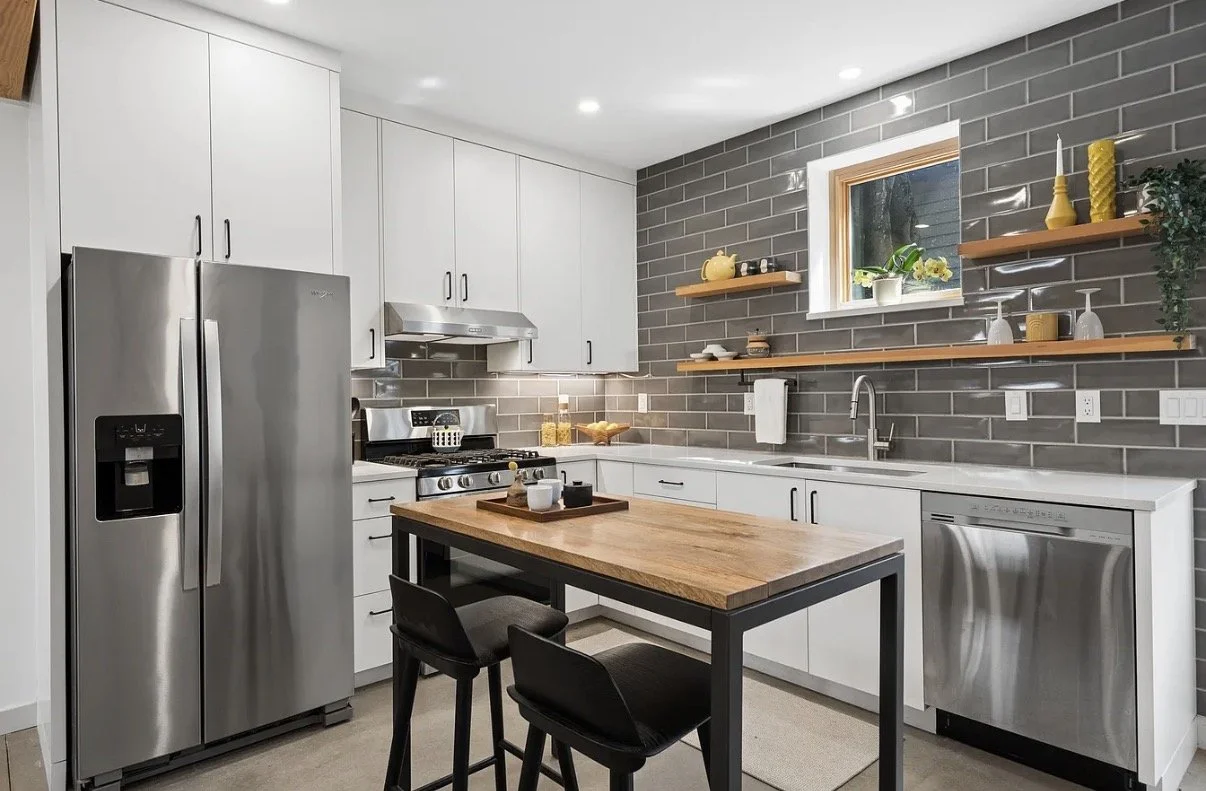
Long-term rentals, furnished mid-term rentals, short-term rentals + creative ways to use an ADU
One of the things I love about homes with accessory dwelling units is that the extra space doesn't have to serve just one purpose. An ADU might provide rental income today, become a private space for an aging parent later, house an adult child someday, serve as a furnished rental between those times, or simply give you a separate place to work, host guests or create. That flexibility can add real value to a home. But if you're considering buying a home with an ADU because of its income potential, there's something important to understand:
The rules can change depending on exactly where the property is located, even within the Portland metro area.
Portland, Milwaukie, Washington County and other cities and jurisdictions have different rules around ADUs, short-term rentals and landlord responsibilities. So before asking, “How much could I rent this for?” I encourage buyers to start with two questions:
What are all the ways I could use this space?
and
Which rules actually apply to this property?
Let's break it down.
What Can You Do With an ADU?
Depending on the property, its permits and the local jurisdiction, an ADU may potentially give you several options:
Rent it long-term to a traditional tenant.
Offer it as a furnished 30+ day mid-term rental for traveling professionals, relocating households, people between homes, insurance-displacement housing and more.
Explore permitted short-term rental use where local regulations allow it.
Use it for multigenerational living for an aging parent, adult child or extended family.
Create private guest quarters.
Use it as a home office, studio or creative space.
Live in the ADU later and potentially rent the main house.
The big takeaway?
An ADU isn't just a rental. It's flexibility.
And if rental income is part of your plan, always verify the property's permits, jurisdiction and current regulations before relying on that income.
If you’re still figuring out where and what to buy, start with my [Portland Home Buyer Guide] for resources on neighborhoods, the buying process, financing and making a smart Portland-area purchase.
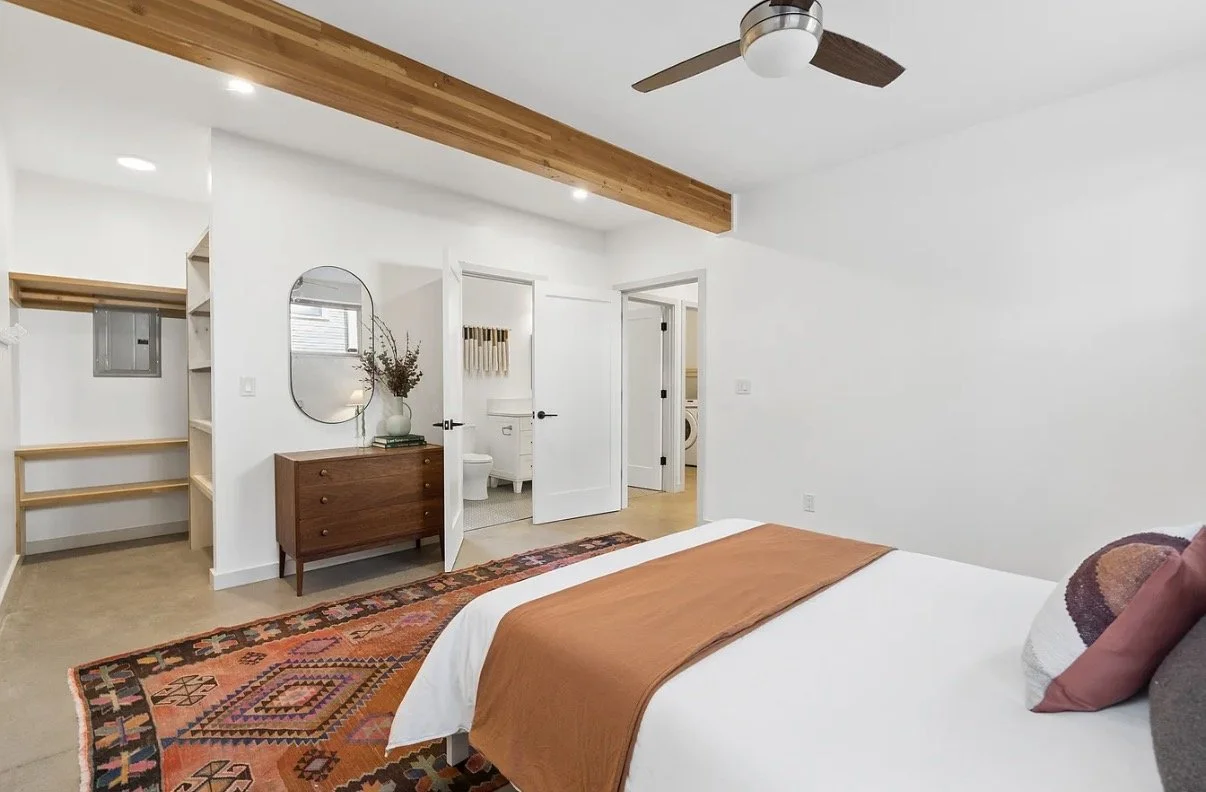
First: What Exactly Is an ADU?
An Accessory Dwelling Unit, or ADU, is an additional dwelling located on the same property as another residence.
Depending on the home, it might be:
A detached backyard cottage
An apartment over a garage
A converted basement
An attached addition
A dwelling created within the primary house
A true ADU generally has its own facilities for living, sleeping, cooking and bathing.
But here's an important distinction for buyers:
A space that looks like an ADU isn't necessarily a legally permitted ADU.
A beautiful finished basement with a kitchen and bathroom may have a very different permit history than a legally established dwelling unit.
If you're considering buying a home with an ADU in the Portland metro, understanding both the rental options and the property's permit history can help you evaluate its true potential.
Six Ways an ADU Could Work for You
1. Create Income With a Long-Term Rental
This is probably the most familiar option. You live in the primary house and rent the ADU to a traditional tenant, potentially creating consistent monthly income while maintaining separate living spaces. Depending on the circumstances, that could involve a fixed-term lease or month-to-month tenancy. It's relatively straightforward conceptually, but once you become a landlord, Oregon landlord-tenant law applies — along with any additional protections imposed by the city or jurisdiction where the property is located. That's why a rental in Portland may be treated differently from an otherwise identical rental a few miles away in Milwaukie or Washington County.
2. Consider a Furnished Mid-Term Rental
This is one of the rental strategies I think buyers often overlook. A mid-term rental generally refers to a furnished home rented for 30 days or longer — often for one, two, three or several months. It's the space between a traditional year-long lease and a nightly vacation rental.
And the potential renter pool is much broader than just travel nurses.
Who Needs Furnished Housing for 30–90+ Days?
Traveling Healthcare Professionals
Portland's large healthcare community creates temporary housing needs for people such as:
Travel nurses
Physicians
Physical and occupational therapists
Medical residents and fellows
Technicians
Other traveling medical professionals
People Relocating to Portland
Imagine moving across the country for a new job.
You may not want to sign a year-long lease before you understand Portland's neighborhoods — and you probably don't want to live in a hotel for three months.
A furnished ADU can fill that gap while someone gets settled and searches for a permanent home.
Buyers + Sellers Between Homes
Real estate timelines rarely line up perfectly.
Someone might sell their house before finding the next one. A buyer might be waiting for a renovation or new construction to finish.
A furnished monthly rental can provide a comfortable bridge.
Insurance-Displacement Housing
Families sometimes need temporary furnished housing after:
Fire or smoke damage
Water damage
Major repairs
Other insured losses
Those stays can last weeks or months.
Corporate + Project-Based Housing
Consultants, executives, contractors, academics and other professionals sometimes need temporary Portland-area housing for a specific assignment.
People Renovating Their Homes
Sometimes moving out for two or three months is considerably easier than trying to live through a major renovation.
People Navigating a Life Transition
Temporary furnished housing can also serve people going through divorce or separation, caring for a family member, hosting extended family, changing jobs or navigating another situation where a traditional year-long lease doesn't make sense.
Why Mid-Term Rentals Are Worth Considering
For the right homeowner, a furnished 30+ day rental can create an interesting middle ground:
More flexibility than a traditional year-long lease.
Less turnover than a nightly vacation rental.
A tenant pool that isn't dependent on tourism.
The ability to keep the space furnished and potentially use it for family or guests between tenants.
There are also tax and regulatory distinctions between transient lodging and longer stays.
For example, under Oregon's transient lodging tax rules, lodging occupied by the same person for 30 consecutive days or more may qualify for an exemption from the state's transient lodging tax.
That doesn't mean a 30+ day rental is regulation-free. Landlord-tenant laws, taxes, insurance and other requirements may still apply.
It simply makes 30 days an important line to understand.
If you’re the one making the move, my [Moving to Portland: How to Choose the Right Neighborhood] guide is a good place to start. It walks through how to narrow down neighborhoods based on lifestyle, commute, housing style and the things that actually matter to your day-to-day life.
3. Explore Short-Term Rental Potential
Airbnb, VRBO and similar short-term rentals are another potential strategy — but this is where buyers should be particularly careful about making assumptions.
Owning a home with an ADU does not automatically mean you can operate the ADU as a full-time vacation rental.
Short-term rental rules vary by jurisdiction.
Portland Short-Term Rental Rules
Portland regulates qualifying short-term rentals as Accessory Short-Term Rentals, or ASTRs.
For a typical Type A ASTR, the resident must occupy the dwelling as their primary residence for at least 270 days during the calendar year.
The resident can generally be away while guests occupy the rental for up to 95 days per year.
Permitting, business registration, neighborhood notification, lodging taxes and other requirements may also apply.
ADUs can potentially be used for accessory short-term rental purposes, but property-specific restrictions matter. For example, certain ADUs that received previous System Development Charge incentives may have restrictions on short-term rental use.
Bottom line: Don't automatically count on full-time Airbnb income when evaluating a Portland ADU.
Milwaukie Short-Term Rental Rules
Milwaukie has its own short-term rental regulations.
A qualifying short-term rental generally involves stays of fewer than 30 days and is treated as an accessory use to a primary residence.
Current rules include an owner or primary-operator occupancy requirement of at least 270 days per year, and unhosted short-term rentals are limited to 95 days per year.
Milwaukie also has registration, building and safety requirements associated with establishing a short-term rental.
So while Milwaukie's overall rental regulations differ from Portland's, an ADU there should not automatically be viewed as an unrestricted vacation rental.
What About Washington County?
This is where understanding jurisdiction becomes especially important.
A property with a Portland mailing address may actually be located in unincorporated Washington County rather than within Portland city limits.
Washington County currently states that it does not generally regulate short-term rentals at the county level.
That does not mean every dwelling in Washington County can automatically become a vacation rental.
Zoning, building requirements, state regulations, HOA rules and property-specific restrictions can still matter.
Washington County also expanded ADU allowances to certain rural residential properties in 2026, and those newly permitted rural ADUs specifically cannot be used for vacation occupancy.
And if the property is located within Beaverton, Hillsboro, Tigard or another incorporated city, you'll need to check that city's requirements rather than relying on Washington County's rules.
Which brings me to one of the most important lessons in this guide:
Never determine rental rules from the city written on the mailing address alone.
4. Create Multigenerational Housing
Of course, not every benefit of an ADU has to show up as rental income.
An ADU can provide independent housing for:
Aging parents
Adult children
Extended family
An au pair or caregiver
Long-term guests
Having a separate kitchen, bathroom, living space and entrance can create a completely different experience from simply adding another bedroom.
Family can be close while everyone maintains some privacy and independence.
And even if you don't need that arrangement today, you may really appreciate having the option ten years from now.
5. Live in the ADU + Rent the Main House
Here's another strategy buyers don't always consider.
Your housing needs at 40 may be very different from your housing needs at 65.
Someone might initially live in the primary residence and use the ADU for rental income.
Later, depending on applicable rental, financing, insurance and local requirements, that same homeowner might choose to occupy the smaller ADU and rent the larger house.
That could allow someone to remain on a property, and in a neighborhood they love, while significantly reducing the amount of living space they personally maintain.
That's one reason I think of ADUs as long-term housing flexibility, rather than simply rental units.
6. Don't Rent It at All
Sometimes the luxury is simply having another space.
An ADU could potentially become a:
Private home office
Art studio
Writing space
Guest suite
Remote-work retreat
Hobby space
Place for visiting family
You don't have to become a landlord to benefit from having an independent living space.
Location Matters: Portland Metro Rental Rules Aren't All the Same
One of the most useful things a buyer can understand is that “Portland metro” isn't one rental jurisdiction.
A property could fall within:
City of Portland
City of Milwaukie
City of Beaverton
City of Hillsboro
City of Tigard
Unincorporated Washington County
Unincorporated Clackamas County
Another local jurisdiction entirely
And the rules aren't interchangeable.
A Portland mailing address doesn't necessarily mean a property is located within Portland city limits.
So what's the first step?
Determine the property's actual jurisdiction before researching its rental rules.
From there, I like to think of rental research in three layers:
1. Oregon law
The statewide landlord-tenant, rent-stabilization and lodging requirements that may apply.
2. Local city or county rules
Portland, Milwaukie, Beaverton, Washington County and other jurisdictions may add their own requirements.
3. The specific property
Permit history, zoning, ADU approvals, prior incentives, HOA restrictions, financing and other property-specific considerations.
All three matter.
Portland Has Additional Local Landlord Requirements
This distinction becomes particularly important for traditional and mid-term rentals.
Properties within Portland city limits may be subject to additional local renter protections, including Portland's Mandatory Renter Relocation Assistance program.
Certain events can potentially trigger relocation assistance, including some termination and non-renewal situations, substantial changes to lease terms and rent increases of 10% or more within a 12-month period.
But There's an Important Owner-Occupied ADU Exemption
Portland has a potential relocation-assistance exemption specifically for certain landlords who live on the property and rent a dwelling unit on a property containing an ADU.
However, don't assume that exemption happens automatically.
Portland has an exemption process with specific requirements and notice procedures.
This is exactly the kind of thing I'd want a buyer to understand before signing their first lease, rather than discovering it later when they want the space back for another purpose.
Buying a Home With an ADU? Here's What I'd Investigate.
Before relying on potential ADU income when deciding whether to purchase a property, I recommend verifying:
Whether the ADU was legally permitted
Whether final inspections were completed
The property's actual jurisdiction
Zoning and approved use
Whether previous incentives or fee waivers restrict how the ADU can be used
Short-term rental eligibility
Business-registration requirements
Local landlord regulations
Oregon landlord-tenant requirements
Insurance requirements
Mortgage or lender restrictions
Smoke and carbon-monoxide requirements
Bedroom and egress requirements
Utility arrangements
Parking and access
Privacy between the two living spaces
Realistic long-term and furnished rental rates
And if anticipated rental income is an important part of making the purchase financially viable, I'd want these questions answered before you rely on that income in your purchasing decision.
The Bigger Question: How Flexible Is the Property?
When buyers see an ADU, one of their first questions is often:
“How much could I rent it for?”
That's certainly worth investigating.
But I think there's an even better question:
“How many different ways could this property work for me over the next 10 or 20 years?”
Maybe today you want rental income.
Five years from now you need space for a parent.
Later you want a home office.
Your adult child might need somewhere to live.
Eventually, you may want to live smaller without leaving your neighborhood.
The same ADU could potentially serve a completely different purpose during each of those chapters.
A home that can adapt along with you can be incredibly valuable.
Thinking About Buying a Home With an ADU?
Homes with ADUs, duplexes, guest houses and other flexible living spaces can create opportunities a traditional single-family home simply can't.
But evaluating one involves more than estimating the rent.
When I'm helping a buyer consider a property like this, I want to understand how they might use the space now, how that could change over time, and which questions we need answered before they rely on potential rental income.
If you're considering a Portland-area home with an ADU, guest house or other income-producing potential, I'm happy to help you think through those possibilities and identify the questions you'll want answered before you buy.
Denise Wolfe | Urban Nest Realty
Portland-area residential real estate
This guide is intended for general educational purposes and does not constitute legal, tax, financial, zoning, property-management or investment advice. Rental and land-use regulations change, and individual properties and tenancies may be subject to different requirements. Buyers and property owners should independently verify current regulations and property-specific information with the appropriate government agencies and qualified professional advisors.
Frequently Asked Questions About Portland Metro ADUs + Rentals
-
Potentially, yes. A legally established ADU can generally be rented as a residential dwelling, but the rules depend on how you plan to rent it. A traditional or furnished 30+ day rental is treated differently from a short-term rental. Portland also has local landlord requirements in addition to Oregon landlord-tenant law.
Always verify the specific property's permits and any restrictions before relying on rental income.
-
Potentially, but owning an ADU does not automatically mean you can operate it as a full-time Airbnb.
Portland regulates short-term rentals through its Accessory Short-Term Rental program. Primary-residency, permitting, business registration, lodging-tax and other requirements may apply. Certain ADUs may also have property-specific restrictions related to previous incentives or System Development Charge waivers.
If short-term rental income is important to your purchase, verify eligibility for that particular property before you buy.
-
Potentially, yes. A furnished 30+ day mid-term rental can be an interesting alternative to both a traditional year-long lease and a nightly vacation rental.
Potential renters might include traveling healthcare professionals, relocating employees and families, people between homes, corporate travelers, people displaced by insurance claims and homeowners temporarily relocating during renovations.
Keep in mind that a 30+ day furnished rental may still create a residential tenancy and trigger applicable Oregon and local landlord-tenant requirements.
-
No, and this is one of the most important things for buyers to understand.
Oregon law creates the statewide foundation, but cities and counties may have additional rules. Portland and Milwaukie have their own short-term rental requirements, while unincorporated Washington County has different regulations.
Properties inside Beaverton, Hillsboro, Tigard or another incorporated city may be subject to that city's rules instead.
Always determine the property's actual jurisdiction before researching its rental potential.
-
Not necessarily.
A property can have “Portland, OR” as its mailing address while actually being located in an unincorporated area or another jurisdiction.
The governing jurisdiction — not simply the mailing address, determines which local zoning and rental regulations apply.
-
Potentially. This can be one of the most interesting long-term benefits of owning a property with an ADU.
An owner might live in the primary residence today, rent the ADU for income, and eventually choose to live in the smaller unit while renting the larger house.
Whether that works for a particular property and tenancy depends on local regulations, financing, insurance and other requirements, so it should be verified before making it part of your financial plan.
-
Don't rely solely on how the property is described in a real estate listing.
Permit records can help determine whether the ADU was legally established and whether required inspections and approvals were completed.
When I'm helping a buyer evaluate a home with an ADU or other separate living space, permit history is one of the things I want to investigate before the buyer relies on that space as a legal rental.
-
It can be, but rental income is only one part of the equation.
An ADU may provide income, but it can also create value through flexibility: housing for a parent, space for an adult child, a home office, furnished temporary housing, guest quarters or even a future downsizing option.
Rather than asking only “How much can I rent this for?” I encourage buyers to ask:
“How many different ways could this property work for me over time?”
That's often where the real value of an ADU becomes apparent.
Thinking About Buying a Home With an ADU?
Homes with ADUs, duplexes, guest houses and other flexible living spaces can create opportunities a traditional single-family home simply can’t.
But evaluating one involves more than estimating the rent. When I’m helping a buyer consider a property like this, I want to understand how they might use the space now, how that could change over time, and which questions we need answered before they rely on potential rental income.
If you’re considering a Portland-area home with an ADU, guest house or other income-producing potential, I’m happy to help you think through those possibilities and identify the questions you’ll want answered before you buy.
Just starting your home search? Visit my [Portland Home Buyer Guide] for more resources on buying a home in the Portland metro.
